Best Unified API Platforms: OpenRouter vs SayGm vs LiteLLM
OpenRouter, LiteLLM, and SayGm all promise to collapse your model integrations into one API. Here's how they actually differ on cost, control, and what happens to your prompts along the way.
BSBrittany Seales· Marketing5 min read
On this page
Every app that calls more than one model provider eventually hits the same wall: separate SDKs, separate rate limits, separate bills, and a rewrite every time you want to add or swap a model. A unified API platform, also called an llm gateway, exists to collapse all of that into one endpoint. The question isn't whether you need one, it's which of the best unified api platforms actually fits how your team ships.
This post compares the three you're most likely to be weighing right now: OpenRouter, the hosted aggregator most developers already know; LiteLLM, the open-source proxy teams self-host; and SayGm, the gateway built around hardware-verified privacy rather than just routing convenience.
Table of Contents
- What Is an AI Gateway and Why Use One?
- OpenRouter vs SayGm vs LiteLLM at a Glance
- SayGm: Hardware-Verified Privacy Built In
- OpenRouter: Breadth Without Infrastructure
- LiteLLM: Self-Hosted Control
- Which One Should You Actually Use?
- FAQ
- Conclusion
What Is an AI Gateway and Why Use One?
An AI gateway, or LLM gateway, sits between your application and the model providers you call (OpenAI, Anthropic, Google, and others) and gives you one consistent interface instead of a separate integration for each. Most gateways solve the same three problems: failover when a provider has an outage, one bill instead of several, and the ability to swap models without rewriting application code. Where they genuinely differ is deployment model, catalog size, and what happens to your data on the way through.
OpenRouter vs SayGm vs LiteLLM at a Glance
| SayGm | OpenRouter | LiteLLM | |
|---|---|---|---|
| Deployment | Hosted, managed for you | Hosted, managed for you | Self-hosted (you run it) |
| Catalog | ~30 curated frontier and open models | 300+ models | 140+ providers |
| Pricing | Provider rate, often highly discounted, no purchase fee | Provider rate + platform fee on credit purchases | Free open-source core; commercial add-ons for SSO/audit |
| Data visibility | Gateway itself is hardware-sealed; open-weight models are TEE-shielded end to end | Provider sees prompt; gateway operator can technically log traffic | Depends entirely on your own infrastructure and configuration |
| Setup time | Minutes | Minutes | Requires standing up and maintaining your own proxy |
SayGm: Hardware-Verified Privacy Built In
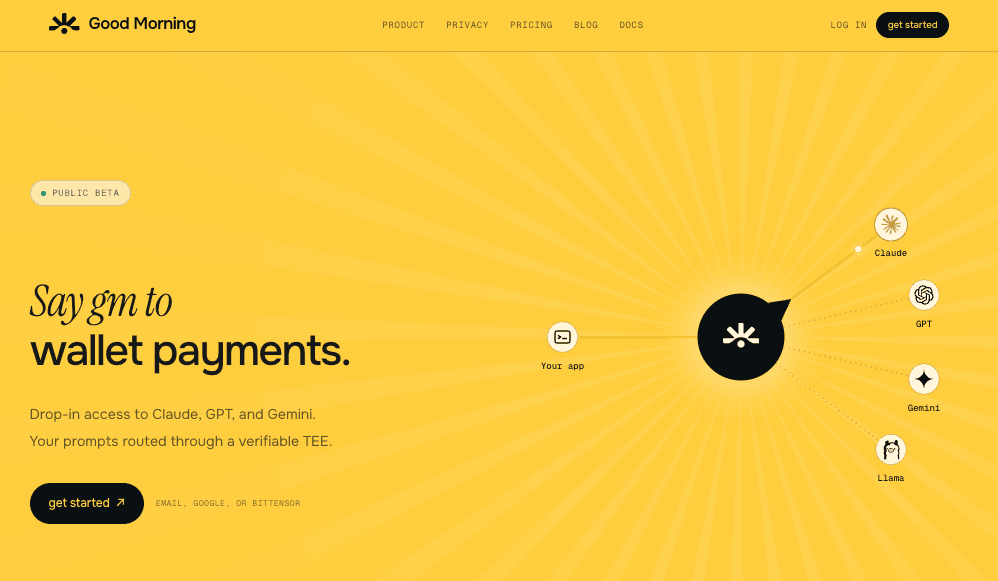
SayGm is a hosted gateway like OpenRouter, drop-in compatible with the OpenAI, Anthropic, and Gemini SDKs you're already calling, but built around a different core claim: the gateway itself runs inside an Intel TDX trusted execution environment, so the routing layer is hardware-sealed rather than policy-protected.
That splits into two distinct tiers worth understanding separately. On frontier models like Claude, GPT, and Gemini, the model maker still receives your prompt under its own API terms, that's unavoidable if you want their model, but the route to get there is sealed, so SayGm, the host, and network operators never see it in transit. On open-weight models, inference runs inside the TEE itself, so nobody, including SayGm, ever sees the prompt in the clear. It's a meaningfully stronger guarantee than anonymized routing, which only hides who's asking, not what's being asked.
There's no subscription and no fee for loading credits, which is a real point of difference from OpenRouter's platform fee on purchases. SayGm's live pricing table shows exactly what each model costs today, rates move with provider bidding rather than sitting on a static card, and the average right now sits around 40% under list price.
OpenRouter: Breadth Without Infrastructure
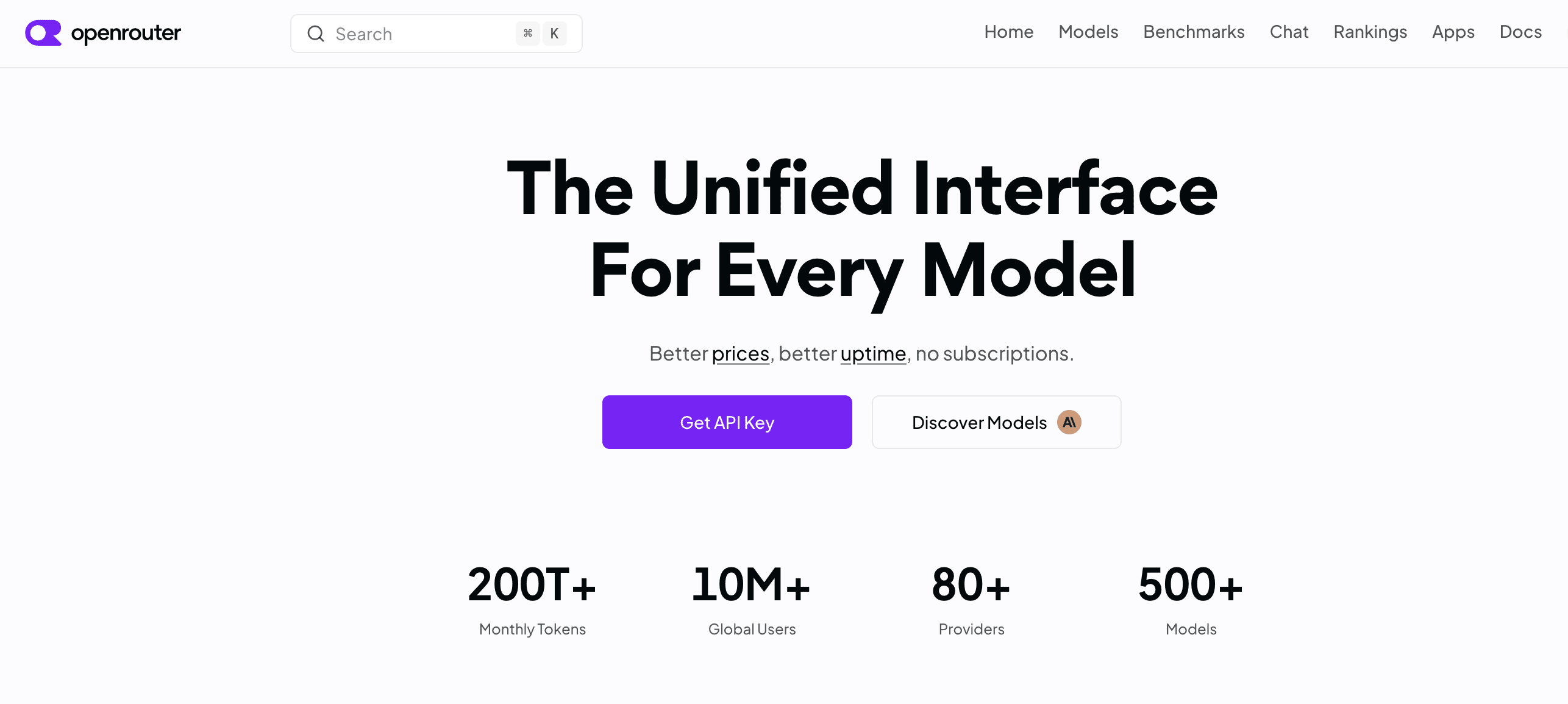
OpenRouter is the default a lot of developers reach for first, and for good reason: one API key gets you to 300+ models across dozens of providers with nothing to run yourself. It handles routing, fallbacks, and a single bill, and it's genuinely the fastest way to test a wide range of models before committing to one.
The tradeoff is on cost and privacy. OpenRouter doesn't mark up the model's own token rate, but it charges a fee on credit purchases, and paid-per-purchase fees add up over a year of steady usage. On privacy, OpenRouter's policy is exactly that, a policy: the platform can technically see traffic passing through it, and per-model handling varies by provider rather than being uniform across the catalog.
LiteLLM: Self-Hosted Control
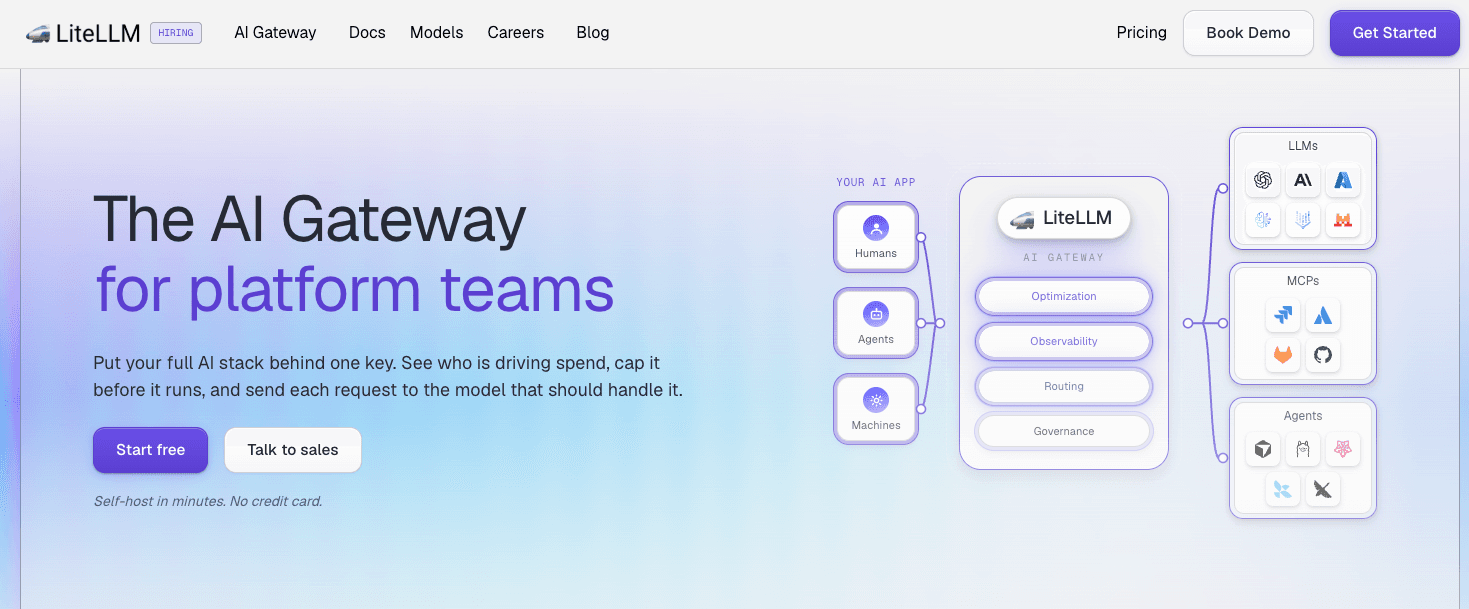
LiteLLM takes the opposite approach: it's an open-source Python proxy and SDK you deploy in your own infrastructure, typically via Docker or Kubernetes. If your team needs data residency guarantees, custom routing logic, or GitOps-style config-as-code for rate limits and budgets, LiteLLM gives you that control because you're the one running it.
That control comes with real operational weight. You own uptime, patching, and scaling the proxy layer yourself, and the core project's flexibility means governance, observability, and guardrails are things you build rather than things you get out of the box. For a platform team with the bandwidth to run it, that's a fair trade. For a small team that wants routing to just work, it's a lot of infrastructure to babysit for what's ultimately a networking problem.
Which One Should You Actually Use?
If you're still evaluating openrouter alternatives because you want the widest possible catalog and don't want to run anything yourself, OpenRouter's breadth is genuinely hard to beat. If your organization needs full control over deployment and is willing to operate its own proxy, LiteLLM is the better fit. If the deciding factor is what happens to the prompt itself, especially for workloads touching customer data, source code, or regulated records, SayGm is built specifically around answering that question with hardware instead of a promise.
None of these three is strictly worse than the others; they're solving slightly different problems. The honest way to choose is to name the constraint that actually matters for your app (catalog breadth, infrastructure control, or data exposure) and let that decide, rather than picking whichever one you heard about first.
FAQ
Is OpenRouter cheaper than calling providers directly?
Not usually. OpenRouter passes through the provider's own token rate without markup, but it charges a separate fee on credit purchases, so going direct to one provider for high, steady volume is often slightly cheaper. OpenRouter earns that fee back through breadth and one-bill convenience across many providers.
Does LiteLLM cost anything?
The core SDK and proxy are open source and free to run. Costs come from the infrastructure you deploy it on, plus optional enterprise add-ons like SSO and audit logging if you need those.
Do I need an AI gateway if I'm only calling one model provider?
Probably not yet. The value of a gateway shows up once you're calling more than one provider, need failover, or want to swap models without a rewrite. A single, stable integration to one provider doesn't need a routing layer in front of it.
Conclusion
The best unified api platform is the one that matches the constraint you actually have, not the one with the biggest logo wall. OpenRouter wins on breadth, LiteLLM wins on control, and SayGm wins when the prompt itself needs to stay sealed.
If that last constraint is yours, get an API key and swap SayGm in as your base URL, no rewrite required, and see the live per-model pricing for yourself.
About SayGM
SayGm is a drop-in inference gateway for teams who don't want to just take a company's word that their prompts are private. Every request runs inside a hardware-verified confidential environment - not even SayGm can see what's inside it. That's not a policy, it's provable. Swap in your existing OpenAI, Anthropic, or Gemini code and you're covered in minutes, at transparent, published rates with no hidden markup.
Say gm to AI at saygm.com.
- AI Model
- API Gateway
- Inference
BS